Fragmented clinical information
Clinical, diagnostic and administrative information may sit in different systems, creating manual handoffs and repeated data entry.
Healthcare technology is effective when clinical, diagnostic, administrative and patient-facing systems work as parts of the same care environment.
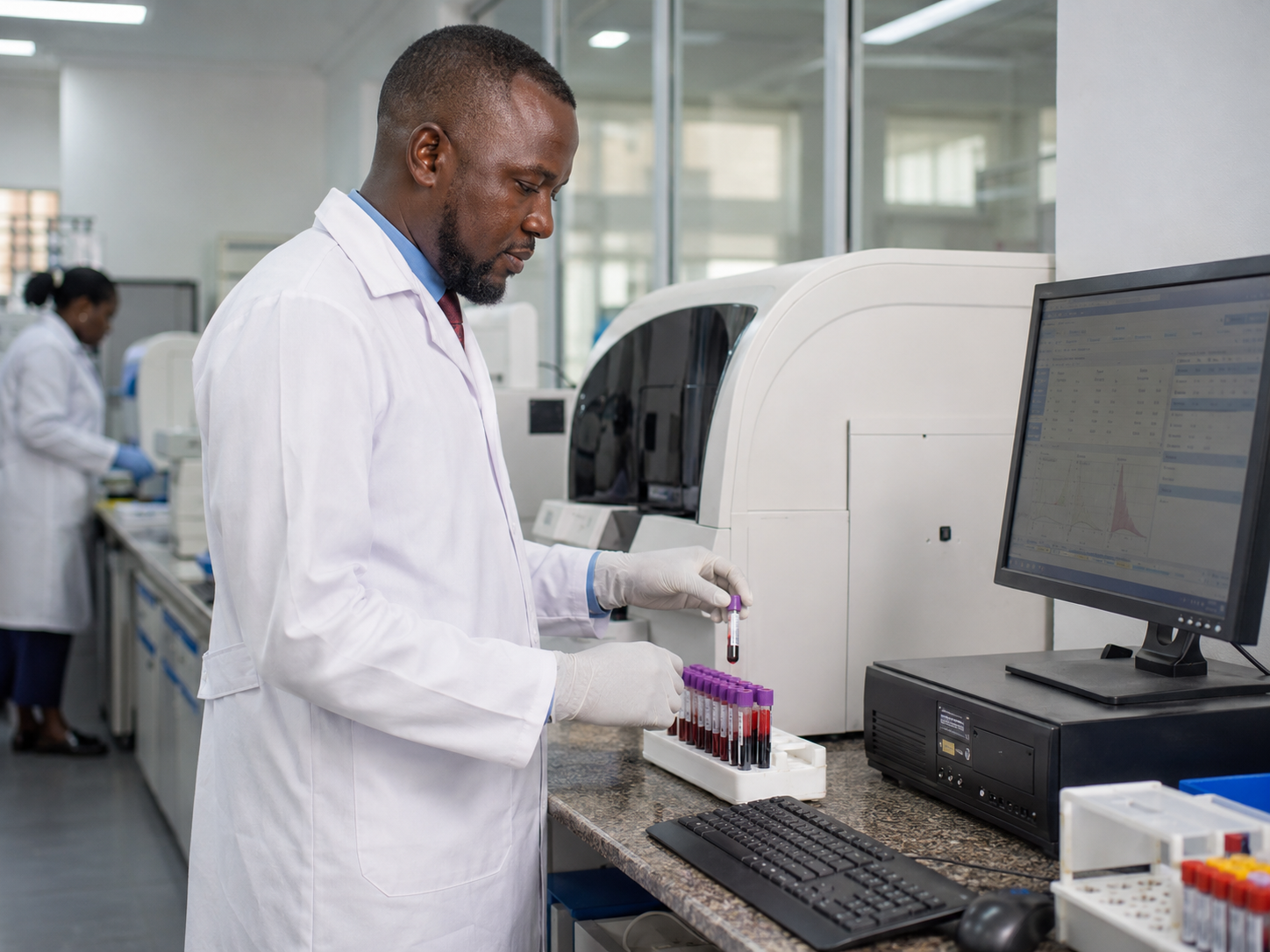
Hospitals and diagnostic organisations depend on specialised systems that often evolve independently: clinical records, laboratory environments, imaging systems, patient access channels, payment and managed-care workflows.
V3C works across those boundaries—connecting digital access, diagnostic infrastructure and institutional systems without treating any single application as the whole healthcare environment.
Clinical, diagnostic and administrative information may sit in different systems, creating manual handoffs and repeated data entry.
Imaging and laboratory environments have their own workflows, devices and reporting requirements that must connect to wider care processes.
Appointments, payments, results and service status need digital access without exposing sensitive clinical information or bypassing hospital controls.
Distributed healthcare requires local continuity, controlled central access and infrastructure that can tolerate connectivity constraints.
Use MyHealth to provide configured access to appointments, payments, approved results, notifications and service workflows.
Explore MyHealth →Design PACS, RIS, teleradiology, worklist and reporting environments around the clinical imaging workflow.
Explore imaging →Connect laboratory, imaging and other diagnostic systems to institutional applications and data flows.
Explore integration →Design local and shared infrastructure so clinical services can operate across multiple facilities with appropriate access and continuity.
Explore multi-site operations →
V3C healthcare technology spans the visible service experience and the systems behind it. MyHealth provides the patient-facing access layer; Healthcare Imaging addresses PACS/RIS/teleradiology; Integration Platforms connect specialised systems and institutional workflows.
Patient / clinician → Digital or clinical access → Integration layer → EMR / LIS / RIS → PACS / diagnostic systems → Data / infrastructure
The exact topology varies by institution. The principle is to keep identity, workflow, specialised clinical systems and infrastructure responsibilities explicit while allowing authorised information to move where care delivery requires it.
A distributed medical imaging environment spanning multiple clinical locations, with local imaging operations, shared access requirements and specialist reporting forming part of the same infrastructure problem.
Read the client story →
MyHealth and connected hospital-service workflows illustrate the patient-facing layer of healthcare integration.
Read the story →Laboratory, device and diagnostic integration illustrates how specialised systems connect to wider operational workflows.
Read the story →Why healthcare integration should start with who needs information, when it is needed and what happens next.
Content development requiredA practical architecture view of local operations, central services, reporting and authorised access.
Content development requiredWhy patient digital access depends on the institutional systems and workflows behind the interface.
Content development requiredTell us which clinical services, systems, facilities and access points need to work together.