Systems Integration
Connect applications, data, workflows and third-party systems so information can move reliably across the organisation.
Explore integration →V3C combines software engineering, integration, infrastructure and digital experience to build technology around how an organisation actually operates.
Applications depend on infrastructure. Digital services depend on operational systems. Data depends on the workflows that create it. Integration sits between them.
V3C approaches technology across these relationships rather than treating each implementation as an isolated application.
Connect applications, data, workflows and third-party systems so information can move reliably across the organisation.
Explore integration →Design and build applications, platforms, APIs and digital services around specific operational requirements.
Explore engineering →Create the infrastructure required to deploy, connect and operate digital services across institutional environments.
Explore infrastructure →Structure operational information for reporting, analytics, dashboards and better-informed decision making.
Explore data →Create practical digital access points for customers, patients, students, employees and other service users.
Explore digital experience →Support and operate deployed technology environments as institutional needs continue to evolve.
Explore managed services →Organisations frequently operate multiple systems, applications and data sources introduced at different times and for different purposes.
Integration focuses on the relationships between those systems: what information must move, where it originates, which workflow depends on it and how access should be controlled.
Layered institutional technology architecture showing users, applications, integration, core systems, data services and infrastructure.
The architecture varies by institution, but the design question remains consistent: how should the components interact to support the operating environment?
Connect clinical, diagnostic and patient-facing systems across healthcare environments.
Explore healthcare →Bring learning, administration, assessment and institutional information into connected digital environments.
Explore education →Design digital services and institutional systems around public-sector operations.
Explore government →Connect transaction, payment and operational workflows through secure digital systems.
Explore financial services →Build and integrate applications that support complex organisational processes.
Explore enterprise →Digitise coordination, scheduling, visibility and operational workflows across locations.
Explore operations →A medical imaging implementation demonstrating how distributed infrastructure, diagnostic systems and clinical access requirements can be considered as one connected environment.
Read the client story →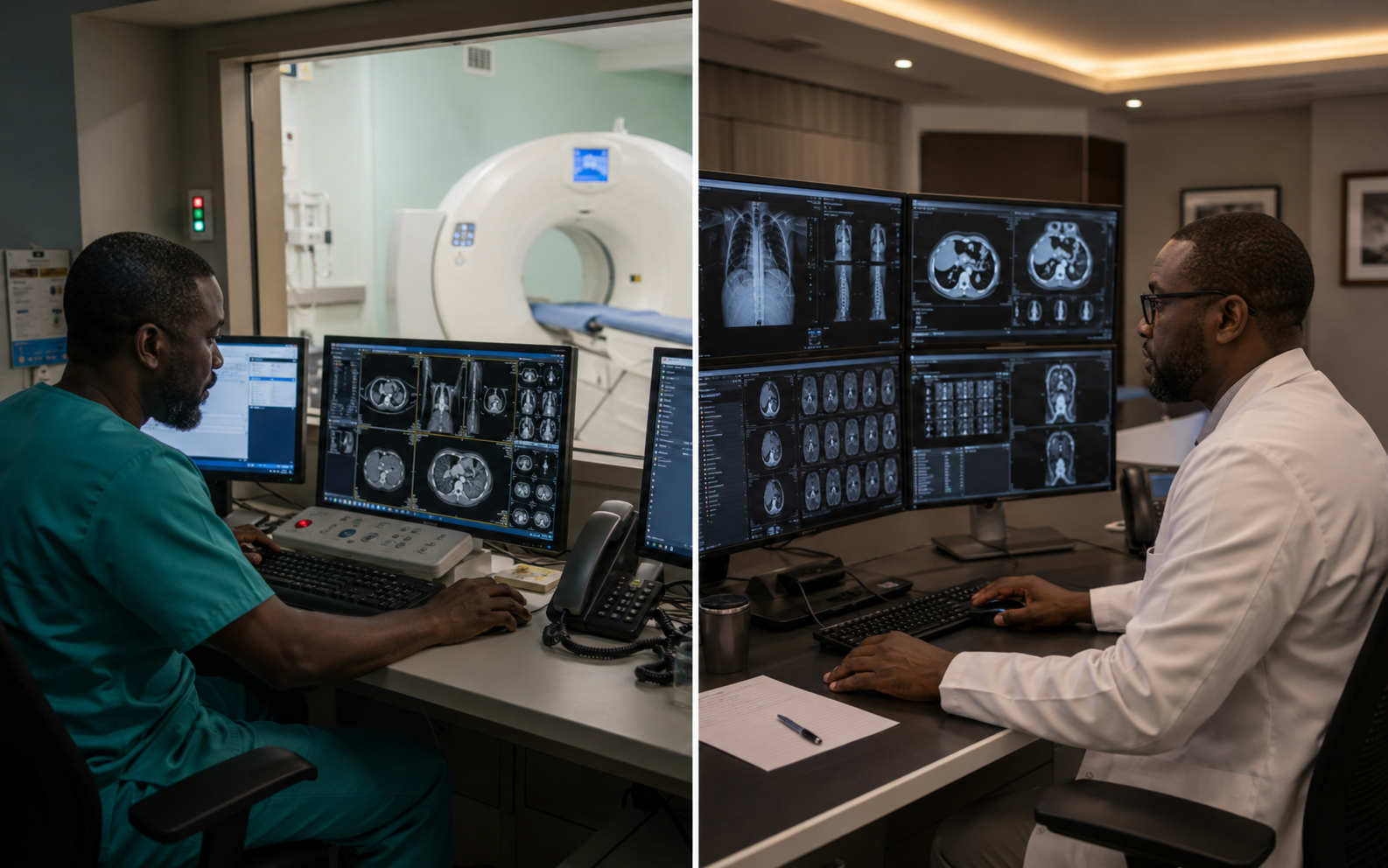
Describe the systems involved, what needs to connect and what needs to change.